
Software Engineer
Build the systems behind everything.
Explore the work first. You do not need to commit to a direction today.
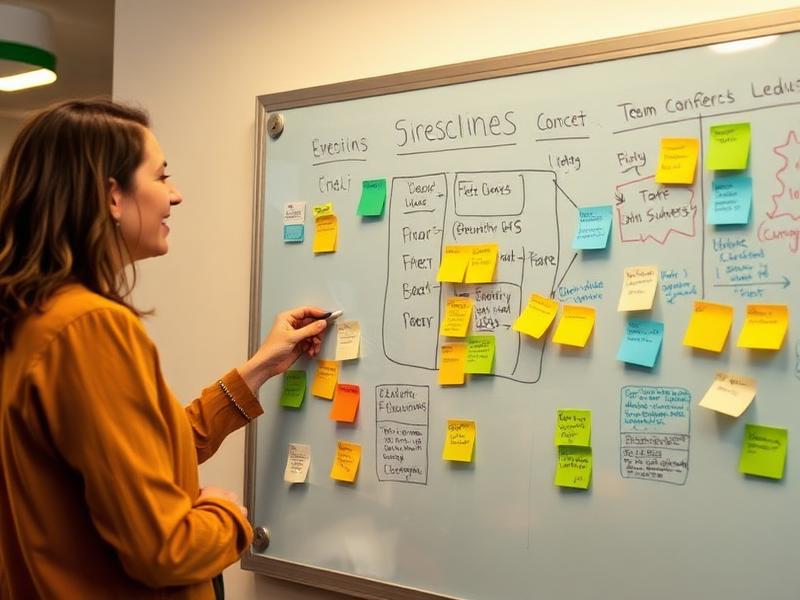
What this career is about
Software engineers design, build, and maintain the applications, APIs, and systems that power modern products and infrastructure.
- Write, test, and review code for production systems
- Design APIs and data models with the team
- Debug issues across the stack
- Collaborate with product and design on what to build
People who thrive here often…
Read these as patterns, not requirements. The more that resonate, the more this role may feel like a fit.
- • Patient
- • Logical
- • Detail-oriented
- • Tolerant of frustration
- • How things work
- • Puzzles
- • Making things
- • Abstract thinking
- • Persistence
- • Pattern recognition
- • Craft
- • Autonomy
- • Learning
- • Long focus blocks
- • Async-friendly
- • Pairing when stuck
Personalized once you've started your profile
Once Vocari knows a little about you, this section explains why this career fits you — and does the same on every career you explore. About 15 minutes to start.
Start your profilePicture yourself inside the role
An imagined day. Not every day looks like this — but enough of them do.
- 9:00 AMStandup
Quick sync with the team on what's blocked.
- 9:30 AMDeep work
Two-hour focus block on the feature you're shipping this week.
- 11:30 AMCode review
Read teammates' PRs. Leave thoughtful comments.
- 12:30 PMLunch
Step away from the screen.
- 1:30 PMDesign discussion
Whiteboard a tricky data model with a senior engineer.
- 3:00 PMBuild + test
Ship a small piece. Run the tests. Open the PR.
- 4:30 PMWrap
Update the ticket, queue tomorrow's first task.
Where this can lead
A common progression. Real careers branch — but this is the shape most people travel through.
Learning fundamentals through coursework or self-study.
First exposure to real work — supervised, low stakes.
Owning small pieces of real projects under close mentorship.
Driving projects end-to-end with growing autonomy.
Owning ambiguous problems and raising the bar around you.
Multiplying impact through people and systems.
Setting strategy across a function or org.
What this career typically pays
Staff and Principal engineers regularly earn $300k–$500k+ at top companies.
What the market is doing right now
What to build
- • A primary language (Python, TS, Go, etc.)
- • Git
- • Testing
- • Databases
- • Cloud basics
- • Clear written communication
- • Patience
- • Collaboration
- • AWS / GCP / Azure certifications (role-dependent)
- • Problem decomposition
- • Documentation
- • Debugging
Requirements at a glance
This is about entry requirements, not whether the work suits you. It never changes your match.
Additional degree required
Bachelor Degree is the usual minimum.
Alternative paths available
Bootcamp or certificate route · Portfolio or work-sample route · Self-taught with open-source work
Time to entry
Typically 9 months–4 years
Education cost
Moderate education cost
Estimate based on U.S. Bureau of Labor Statistics, Occupational Outlook Handbook, checked 2026-08-08. Individual timelines vary.
Tell us your education and any licenses you hold and we can say how this lines up with your background. Add your background
Multiple routes in
There is rarely one path. Here are the most common ones.
- • BS in Computer Science or related
- • Bachelor's in any field + portfolio
- • AWS Solutions Architect
- • Google Cloud Engineer
- • Hack Reactor
- • App Academy
- • Launch School
- • Open-source contributions
- • Portfolio projects on GitHub
- • Reading classic systems papers
- • Conference talks (Strange Loop, etc.)
Worth exploring too
No need to commit yet. Comparing a few paths usually tells you more than choosing one early.
In their own words
Statistics tell you the shape of a career. People tell you what it feels like.
"How much of the job is writing — design docs, PR descriptions, post-mortems. Code is maybe half."
"Ship something small to real users early. You'll learn more from one bug report than ten tutorials."
Turn exploration into momentum
Keep learning about yourself or compare the work before choosing a direction.
The clearer you get about what fits, the easier every next decision becomes.
Start your profile